
SEEING YOURSELF CLEARLY: SELF AWARENESS PSYCHOLOGY
BY SERGIO SHAN-LEE | TO BE MORE HUMAN
Why Do People Feel Certain About Who They Are While Still Misunderstanding Themselves?
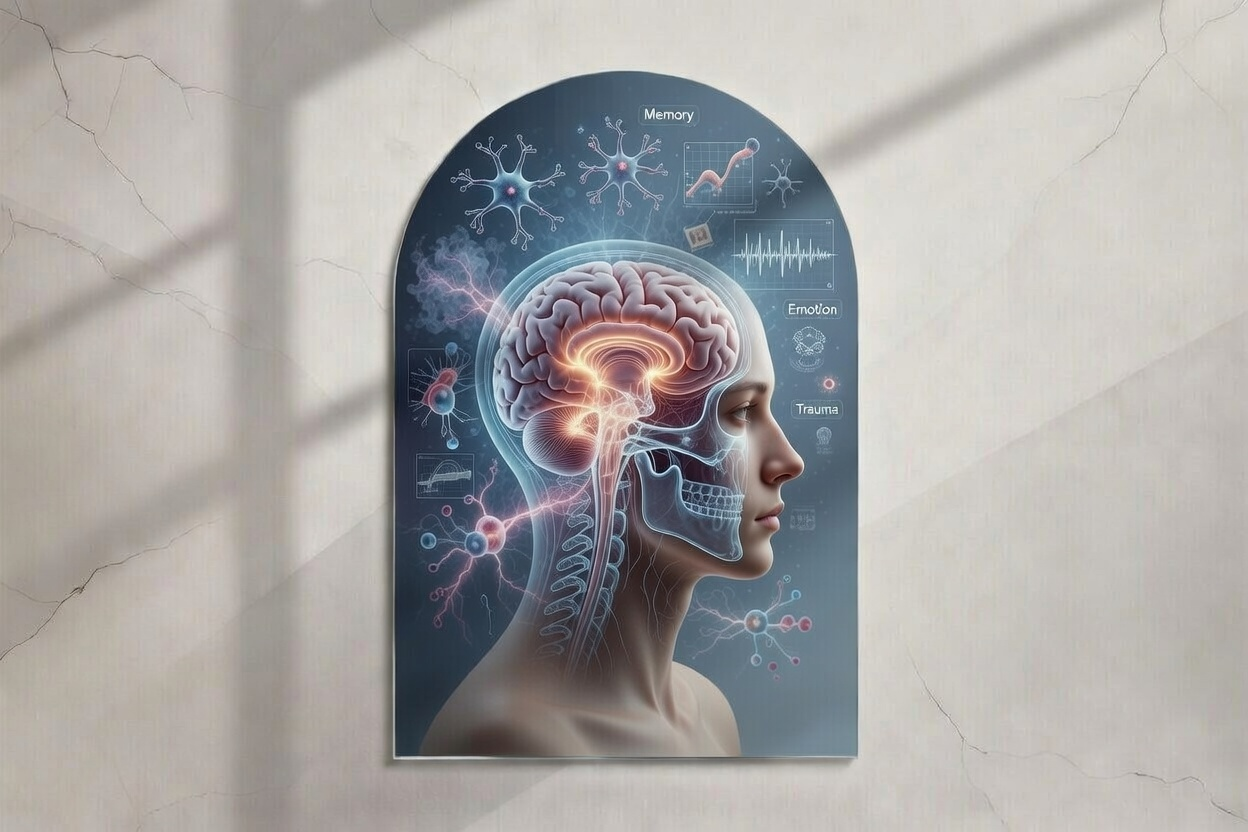
Self awareness psychology reveals why clarity about the self is often an illusion. In fact, Self awareness psychology research shows that clarity about oneself is often mistaken for confidence. Many people believe that because they feel certain about who they are, they must understand themselves accurately.
Illustrated by To Be More Human.
However, psychological research repeatedly shows that the mind is remarkably poor at observing itself. To see yourself clearly is therefore not simply an act of introspection—it is a disciplined process of observation, verification, and honesty. Furthermore, it shows that people often misinterpret their own thoughts and motivations, which is why observing behavior is usually a more reliable path to self-understanding (Nisbett & Wilson, 1977). Psychologists refer to a concept known as self-concept clarity, first studied extensively by researcher Jennifer Campbell. Self-concept clarity describes how clearly and consistently people define their beliefs about who they are. Individuals with high self-concept clarity tend to experience greater psychological stability, stronger decision-making, and less internal conflict (Campbell et al., 1996). Nevertheless, clarity alone does not guarantee accuracy. A person can feel very certain about themselves while still misunderstanding their true patterns of behavior. Moreover, modern research in self awareness psychology suggests that people frequently misinterpret their own motives and internal states, making behavioral observation and external feedback essential components of accurate self-understanding (Nisbett & Wilson, 1977).
COGNITIVE DISTORTIONS THAT LIMIT SELF AWARENESS
This discrepancy arises because the human mind is subject to powerful cognitive distortions. One of the most influential discoveries in psychology, demonstrated by Richard Nisbett and Timothy Wilson, is that people often cannot accurately explain the causes of their own thoughts and actions (Nisbett & Wilson, 1977). When asked why we made a decision or behaved in a particular way, we frequently construct explanations after the fact rather than reporting the true processes that produced the behavior. In other words, we are excellent storytellers about ourselves, but not always reliable observers. However, another limitation is known as the bias blind spot, identified by Emily Pronin and colleagues. Humans readily recognize biases in other people while remaining largely unaware of those same biases within themselves (Pronin, Lin, & Ross, 2002). We believe our own judgments are objective while assuming others are influenced by ego, emotion, or distortion. This asymmetry creates a subtle illusion: the feeling that we are more rational and self-aware than we actually are. A third distortion emerges from the well-known Dunning–Kruger effect, which shows that individuals with lower levels of competence in a domain often overestimate their abilities (Kruger & Dunning, 1999). Ironically, the skills required to perform well are often the same skills needed to evaluate performance accurately. As a result, the less capable someone is in a given area, the more difficult it becomes for them to recognize their own limitations. Taken together, these findings suggest that genuine self-knowledge requires more than reflection. It requires evidence.
SELF AWARENESS PSYCHOLOGY: THREE SOURCES OF TRUE SELF AWARENESS
To better illustrate how self awareness emerges, psychologists often describe it as the convergence of three independent sources of information.
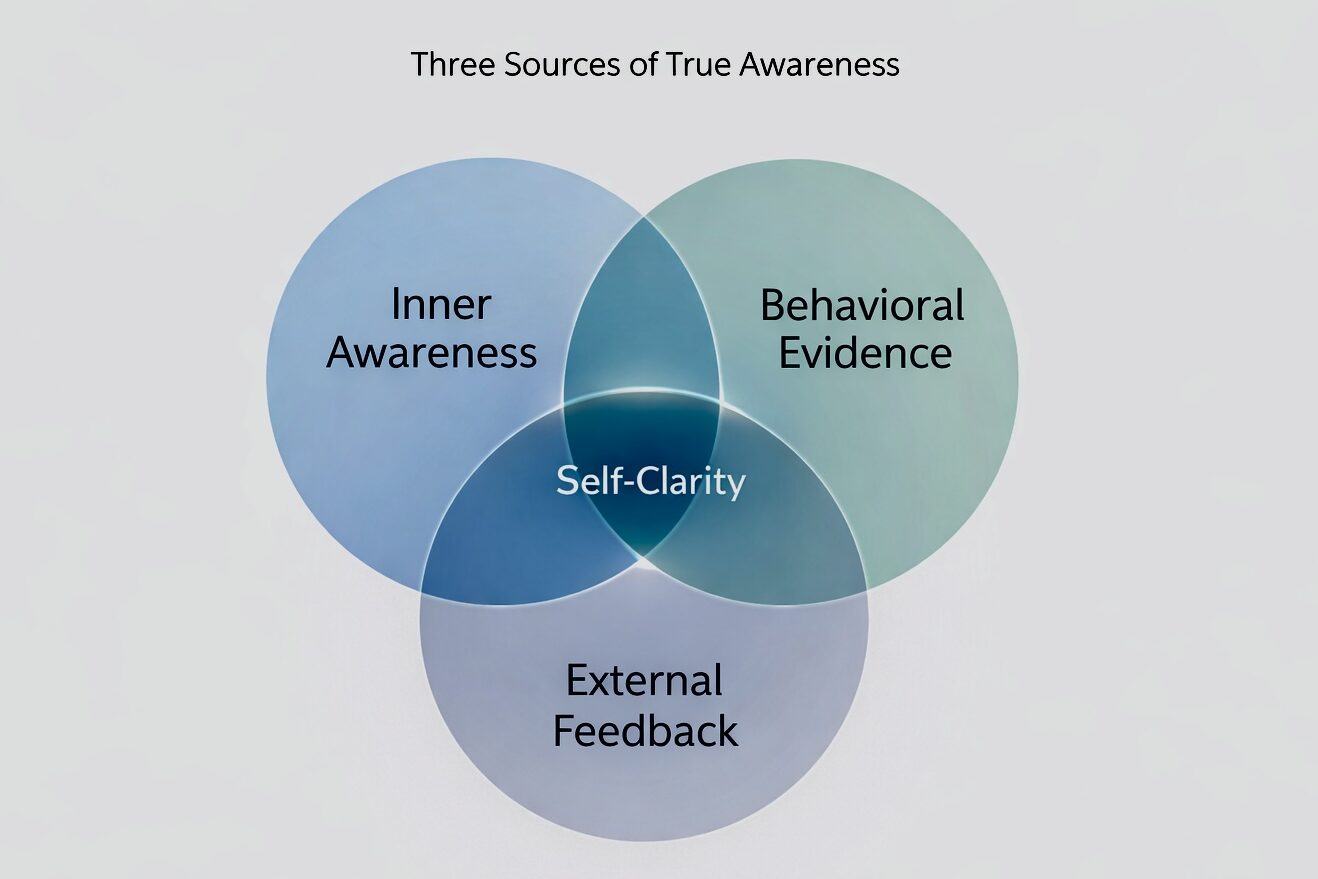
Figure 2. Conceptual Model of Self-Awareness. The diagram illustrates three sources of information that contribute to accurate self-understanding: internal awareness of thoughts and emotions, behavioral evidence derived from actions over time, and external feedback from others.
Illustrated by To Be More Human.
Taken together, these findings suggest that accurate self-understanding is less a matter of introspection alone and more the result of integrating multiple sources of psychological evidence (Campbell et al., 1996). To better understand how accurate self-awareness develops, it can be helpful to visualize the relationship between different sources of psychological information. The following conceptual model illustrates how internal awareness, behavioral evidence, and external feedback interact to produce a clearer understanding of the self. Contemporary research suggests that accurate self-awareness develops through the integration of three complementary sources of information: internal awareness, behavioral evidence, and external feedback. Internal awareness involves observing one’s thoughts, emotions, and subjective experiences through reflective attention. However, introspection alone is often limited, as individuals may misinterpret the origins of their mental states. Behavioral evidence provides a more objective perspective, revealing patterns of action that accumulate over time and reflect underlying motivations, values, and habits. External feedback offers an additional dimension, as other people may perceive aspects of our behavior that remain outside our immediate awareness. When these three perspectives converge, individuals are more likely to achieve a clearer and more stable understanding of themselves. Taken together, these findings suggest that genuine self-understanding is not derived from introspection alone but from integrating multiple sources of psychological evidence that contribute to greater self-concept clarity (Campbell et al., 1996). Ultimately, the art of seeing oneself clearly is not a single moment of insight but an ongoing process of observation, reflection, and adjustment. Psychological research consistently shows that the human mind is not always a reliable narrator of its own motivations. By integrating internal awareness with observable behavior and external feedback, individuals can move closer to a more grounded and accurate understanding of themselves. In this sense, genuine self-awareness is less about certainty and more about openness — the willingness to continually examine one’s assumptions, revise one’s self-perceptions, and remain curious about the evolving nature of the human mind.
THE FUTURE SELF AND PSYCHOLOGICAL CONTINUITY
Modern research on future-self continuity, explored by psychologist Hal Hershfield, adds another dimension to this process. Studies show that people who feel psychologically connected to their future selves make more responsible and long-term decisions (Hershfield, 2011). When tomorrow’s version of you feels like a stranger, impulsive choices become easier. When tomorrow’s self feels like the same person you are now becoming, responsibility naturally increases. Popular behavioral strategist Chase Hughes expresses a similar idea in practical terms: treat your future self as someone you are responsible for serving. Decisions made today become acts of care—or neglect—for the person you will become. Modern work in self awareness psychology suggests that people often confuse confidence with accurate self understanding. In this sense, self-clarity is not merely about understanding who you are. It is about recognizing the trajectory of who you are becoming. The art of seeing yourself clearly is therefore an ongoing practice. It asks you to examine the stories you tell about yourself and compare them with evidence from your actions. It invites humility in the face of cognitive blind spots. And it requires a willingness to revise your identity when reality contradicts your assumptions. True clarity is not the moment when you finally “figure yourself out.” It is the discipline of remaining honest enough to keep learning who you are. Seeing yourself clearly is not about perfection. It is about honest awareness.
IMPLICATIONS
Understanding self awareness as a multi-source psychological process carries important implications for both personal development and decision-making. Individuals often rely primarily on introspection when attempting to understand their motivations and identity. However, research in self awareness psychology suggests that internal reflection alone can be unreliable, as people frequently misinterpret the causes of their thoughts, emotions, and behaviors (Nisbett & Wilson, 1977). A more accurate understanding of the self emerges when individuals integrate multiple forms of psychological evidence. Observing patterns of behavior over time provides objective insight into one’s habits and values, while feedback from others can reveal blind spots that remain invisible through introspection alone. When these sources— internal awareness, behavioral evidence, and external feedback—are considered together, individuals are more likely to develop greater self-concept clarity and more stable self-understanding (Campbell et al., 1996). In practical terms, cultivating self awareness involves moving beyond the question “What do I believe about myself?” and asking additional questions such as “What do my consistent actions reveal?” and “How do others experience my behavior?” Integrating these perspectives allows for a more grounded and evidence-based view of the self, which can support better emotional regulation, improved relationships, and more consistent long-term decision-making.